



ALEJANDRO MARCÓ DEL PONT
The US wins in energy security and the military-industrial complex demonstrates once again its ability to create markets through force
After the invasion and rapid conquest of Greece in April 1941, the Greek country was dismembered into German, Italian and Bulgarian occupation zones. The German portion, which included Athens, the port of Piraeus, and strategic Crete, was the largest and most economically vital. The Nazi occupation authorities, exercising absolute control over the Bank of Greece, imposed on the defeated Greek State the obligation to grant unlimited “credit”to cover the so-called “occupation expenses.”
The German military command presented its demands – ranging from the salaries of its soldiers and the construction of fortifications to the massive acquisition of food and raw materials – to the Greek central bank, which was forced to print drachmas (Greek currency) at a frenetic pace, delivering them to the occupiers at an exchange rate unilaterally set by Berlin, a rate so favorable to the Reichsmark that it constituted plunder in itself.
The Germans used these fresh-off-the-press notes to buy everything of value on the Greek market, causing devastating hyperinflation that, combined with food hoarding, led to a famine that claimed hundreds of thousands of lives. Every note issued under duress was meticulously recorded as a “loan” that impoverished Greece made to its wealthy occupant, a phantom debt that grew exponentially as the country sank into ruin. At the end of the nightmare, the invaders retreated, leaving behind only rubble, misery and an official document declaring that the victims, reduced to starvation, owed a fortune to those who had stripped them of everything.
This economic perversion, this debt disguised in ink and numbers, is not a mere historical artifact. It is the archetype of a mechanism that, with different sophistications, is repeated throughout the history of domination. And it is not very different from the logic that is now implemented, with calculated coldness, on the oil fields of Venezuela.
In the Venezuelan post-intervention scenario of January 2026, the US Department of Energy has directly and coercively contacted the executives of the big oil companies, posing an equation that is the essence of occupation capitalism: private investments in the reconstruction of the Venezuelan energy sector will be the vehicle for the “repayment”of the pending arbitration awards for the 2007 expropriations. That is, the companies will not receive cash compensation for what that it was supposedly ‘stolen’ from them; Instead, they will be “allowed”to invest again, with advantageous conditions, to recover their money through the future exploitation of Venezuelan oil.
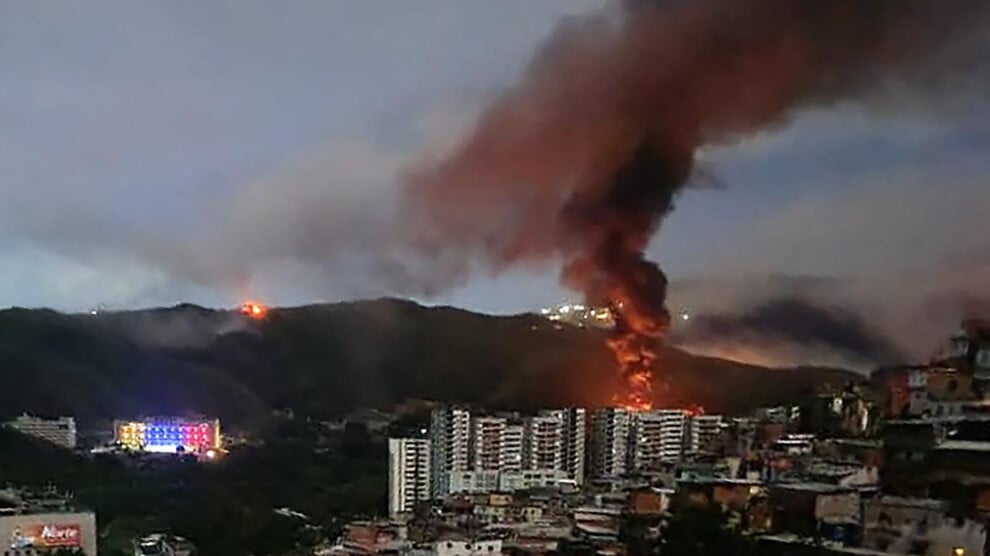
It is about disguising an alleged ‘reparation debt’ with the garb of a new business opportunity, a cycle where the victims of the previous looting themselves must finance the reactivation of the loot, benefiting corporations while evading full and sovereign compensation to Venezuela. This idea, far from being speculation, is based on concrete reports detailing how the US Department of Energy demands investments as a sine qua non for any repayment, thus creating a closed loop where supposed ‘debts’ of the past finance future extraction, and where the cost of military intervention is socialized through Venezuelan debt and privatized through corporate profits.
However, this perverse format, where Venezuela would end up paying – through concessions, reduced royalties and ceded operational control – for the investments for its own oil reconstruction, implies a series of geopolitical and legal premises that must be dissected before reflecting on the specific financial mechanics. In principle, and succinctly, it must be highlighted that the US military intervention obscenely prioritizes raw military power over any multilateral norm, exacerbating the crisis of global legality and de facto installing the “law of the strongest”as the only guiding principle.
The operation, carried out against strong resistance from the Bolivarian Armed Forces, used electrical and electronic blackouts. The United Nations, reduced to irrelevance, condemned the act without coercive measures, a farce that simply highlighted the terminal erosion of the international legal architecture built after 1945. The violations are multiple and flagrant: Article 2(4) of the UN Charter (prohibition of the use of force), the Principle of Non-Intervention (Article 2(7), state sovereignty, territorial integrity, the immunity of heads of State and even the Convention on Internationally Protected Persons. The OAS Charter was also shredded. This disregard for the law is not a side effect; it is a functional requirement for the economic model that is intended to be implemented.
The political design of the Venezuelan transition is equally revealing. In the months before the intervention, as Washington’s bellicose rhetoric intensified, a group of executives, lawyers and investors linked to the oil industry held intense conversations with the Trump administration and congressional advisers.
They attempt to put into practice the perfect formula for efficient neocolonialism: using a collaborative local elite to manage resource extraction, maintaining the façade of a sovereign government while transferring real control to foreign corporations. It would be, in essence, using Chavismo to destroy Chavismo as a sovereign project, transforming it into an income manager for new owners. But they are not achieving it.
The underlying economic theory seems seductively simple. Venezuela has vast oil reserves, in fact the largest certified reserves in the world, and at its peak produced more than triple the current 1.2 million barrels per day. Therefore, Hollywood logic dictates that, with a massive infusion of Western capital and technology, it should be easy (it’s not at all) to modernize deteriorating equipment and watch the extra barrels — and profits — flow in again. But American interest transcends mere extraction. It has a strategic component of energy security and, more specifically, refining profitability.
The Gulf of Mexico coast of the United States, especially Texas and Louisiana, is dotted with huge refineries designed specifically to process heavy, acidic crude oil, the type of oil that Venezuela produces in abundance. Since sanctions cut off the flow in 2019, these refineries have been forced to look for substitutes such as Mexican Maya crude, yielding inferior results: efficiency losses of up to 10% in the production of high-value fuels such as gasoline and diesel. differences in chemical composition.
The mechanics of the «debt-investment exchange» reveal their genius here, in perfect harmony with the logic of the self-financing «war machine». According to January 2026 reports, Trump proposed a conditional swap. US oil majors, particularly ExxonMobil and ConocoPhillips, must make significant investments in Venezuela to access any repayment for assets legally expropriated in 2007.
The awards from the International Center for the Settlement of Investment Disputes (ICSID – the World Bank, which has always supported Western interests) are large: ConocoPhillips won a verdict of $ 8.7 billion (close to 12 billion in 2026 with interest) and ExxonMobil between 1,600 and 2,000 million. The industry total exceeds $10,000 million and this is a phantom and illegal debt hanging over PDVSA and the State of Venezuela. The new plan turns this debt into leverage rather than paying it off.
The military intervention that kidnapped Maduro and Cilia Flores on January 3 poses no net cost to American taxpayers; It is presented as an operation that «pays sola» through oil theft financed by private capital, in return compensating past losses with future profits. It’s a perfect cycle: War opens the door, foreign capital steals in, and profits cover previous political and legal costs.
The operating mechanism is a pragmatic and coercive «quid pro quo» inspired by Trump’s vision that «Venezuelan oil will pay for it». First, mandatory investments are required. Companies must commit between $20,000 and $50,000 million in infrastructure for PDVSA, particularly through ‘joint ventures’ in which they regain operational control of deposits once expropriated from them in the Orinoco Belt.
Second, paybacks depend on these investments. The so-called transitional government will use future oil revenues to pay the rewards, a process facilitated by the lifting of sanctions and the protection of assets such as Citgo. There won’t be a $12 billion check for ConocoPhillips; instead, you will be granted concessions with very low or no royalties, or you will be allowed to deduct the amount of your investments so that your long-term profit equals the amount of the reward. Whoever does not invest loses all priority in collection.
Third, this plan indirectly finances the intervention. According to the logic of the war machine, private investments offset military and stability costs, achieving net zero costs for the American treasury. Extracted oil flows to Gulf refineries, providing employment, taxes and domestic energy security.
But this design clashes with a disturbing economic reality. Estimates from consulting firm Rystad Energy show $155 billion would be needed to repair a decade of illegal sanctions and increase production to 2 million barrels per day by 2030. It’s an astronomical figure even for giants like Exxon and Conoco. This investment effort is further complicated by another of Trump’s conflicting goals: keeping oil prices low around $50 a barrel to benefit the American consumer and generate electoral returns in the 2026 midterm elections.
$50 oil makes high-cost investments in the complex Orinoco Belt much less attractive because they greatly limit profit margins. Oil companies will consider spending cuts, not big investment increases. Trump is handcuffed: He needs crude oil flowing but can’t let its price rise, and he needs companies to invest but give them a low-price environment. The possible solution would be a combination of political guarantees and hidden subsidies: state risk insurance from the US government, long-term purchase contracts for Gulf refineries at preferential prices, and severe pressure on companies to take on «patriotic» risk. The promise of future profits in a reimagined marketplace.
Geopolitical restructuring will be profound. If the US consolidates this indirect control over Venezuelan production (which is highly doubtful), the global flow of heavy crude oil will change. China, currently the largest buyer of Venezuelan crude through swaps and yuan payments, would be pushed out of the market, losing a strategic ally in its economic war with the West. Russia would see the energy alliance within the BRICS weakened. Gulf refineries will regain their ideal power supply, which was one of the reasons for the invasion, reduce dependence on the volatile OPEC and stabilize their margins.
The result for Venezuela is an unstable and deeply dependent stability. Inflation could be stopped and some economic normality could recover, but at a huge cost: Energy sovereignty would be mortgaged for decades. PDVSA will become little more than a nominal entity as international consortia make operational decisions and capture most of the value. Ghost debt rewards are not paid out; they are converted into ownership titles over the future of the country.
In sum, the intervention in Venezuela prioritizes energy over democracy, corporate profit over human rights, and gross power over international law. The humane and democratic excuses that could be used in the face of the crude mechanics of an agreement that turns war debt into mining investment are lost.
The United States is winning on energy security, its companies are recovering and expanding profits, and the military-industrial complex is once again demonstrating its ability to create markets through force. Venezuela, like Greece in 1941, would find itself trapped in the logic of phantom debt: the price of its own occupation, disguised as an investment contract, would be presented to it over generations, while the oil flowing from its bowels would pay trickle by drop, this time the price of a freedom not lost on the battlefield but in the law firms and boardrooms of Houston and Washington.
source: eltabanoeconomista.wordpress.com







+ There are no comments
Add yours